
Naked Emperors
After twenty years in HR and employment law, you’d think nothing about workplace leadership could surprise me. But one type of supervisor still manages to do it every time: the ones who bark orders, then pretend those orders never happened when things go south. The ones who ask for your honest feedback and then punish you for giving it. The ones who, to borrow from an old fable, are strutting around the office in invisible clothes, oblivious to their own flaws, but painfully obvious to everyone else.
Let’s call them what they are: Naked Emperors.
The Emperor’s Playbook
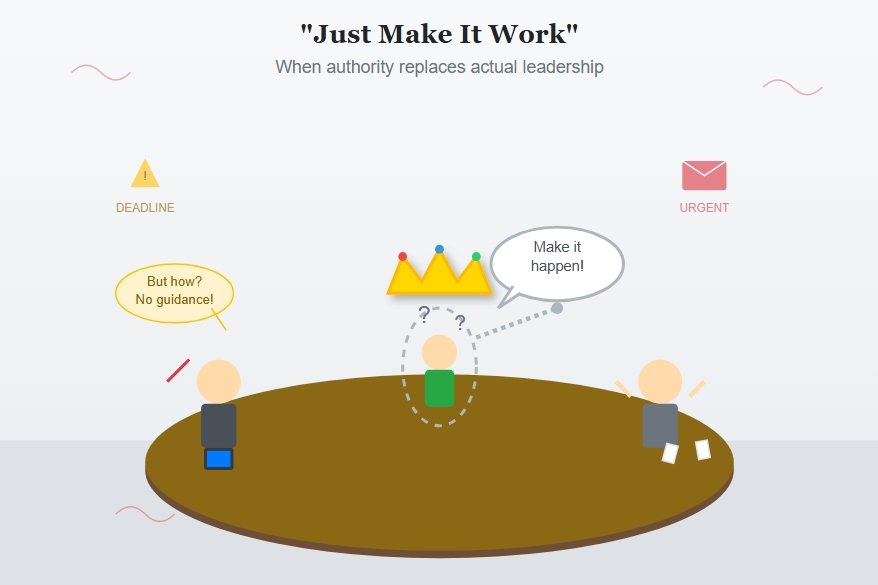
You know the type. They talk a big game but never really listen. They interrupt, dismiss, and deny. They ask for input, only to ignore it—or worse, retaliate. They mistake their title for expertise, meddling in technical decisions they don’t understand. And when things go wrong, they’re suddenly afflicted with “selective memory,” unable to recall the very direction they gave you in last week’s meeting.
But this isn’t just annoying. It’s toxic. And the research backs it up.
What the Science Says
Peer-reviewed studies have a name for this pattern: toxic leadership. It’s not just unpleasant—it actively damages morale, performance, and the bottom line. One cross-sectional study in nursing found that toxic leadership directly led to poor work outcomes, low morale, and increased turnover (Egyptian Journal of Health, 2023). Another found that toxic leadership reduces job satisfaction and motivation, driving good employees away (Health Psychology Research, 2022).
The effects don’t stop at the individual level. Toxic supervisors poison entire teams, creating a climate of mistrust and silence. Employees learn it’s safer to keep their heads down, stop sharing ideas, and avoid risk—killing innovation and growth (European Review of Applied Sociology, 2023).
Retaliation: The Emperor’s Favorite Weapon
One of the most dangerous moves in the Emperor’s playbook is what happens after you give honest feedback. Academics call this retaliation, and it’s a huge legal risk for any organization. If you’ve ever been called in for a “team fit” chat right after submitting a negative 360 review, you’re not alone.
The law (and juries) take a dim view of this. Retaliation claims are among the most expensive and clear-cut cases in employment litigation, especially when there’s evidence of a direct link between feedback and subsequent negative treatment (Ala. L. Rev., 2020; Wash. L. Rev., 2018).
The Importance of Psychological Safety
Why does all this matter so much? Because psychological safety—the sense that you can speak up without fear—is the bedrock of any healthy workplace. Without it, teams stop learning, creativity dries up, and performance tanks. Supervisors set the tone: if they ignore input or punish honesty, the entire team shuts down (Vocations and Learning, 2021).
Research shows that when supervisors model psychological safety, it trickles down to the whole group. When they don’t, silence and fear spread just as quickly (Group & Organization Management, 2018).
The Legal and Business Risks
If you’re in HR or leadership, here’s the bottom line: these Naked Emperors are a liability minefield. Patterns of abusive supervision, such as denying directives or targeting employees after receiving negative feedback, lead to more lawsuits, higher settlements, and reputational damage (Academy of Management Journal, 2000; Asia Pacific Journal of Management, 2015). Hostile work environment and retaliation claims are especially devastating when there’s documentation of inconsistency or dishonesty.
What HR—and Everyone Else—Should Do
Stop giving these supervisors a pass. Document everything. Dig deeper in exit interviews. If you’re an employee, protect yourself with “just to confirm” emails and alliances within the organization. If you’re in HR, investigate sudden performance issues that follow negative feedback about a supervisor.
Recognize the warning signs: talking but not listening, asking leading questions, meddling outside their expertise, and displaying selective memory. Don’t let them keep parading around in invisible clothes.
The Bottom Line
Toxic supervisors are not just annoying; they’re detrimental to people, harmful to business, and pose a significant legal risk. The best organizations foster genuine leadership: supervisors who empower their teams, acknowledge mistakes, and prioritize honest input over their own ego.
Let’s stop pretending the Emperor is a leader just because he says he is. Let’s hold our supervisors and ourselves to a higher standard.
References
- Relationship between toxic leadership and work outcomes: a cross-sectional study
- Impact of toxic leadership on employee performance
- About the impact and effects of toxic leadership on employees and organizations
- Uncovering Harassment Retaliation
- Retaliation backlash
- Beyond psychological safety–the role of direct supervisor behavior in fostering learning from errors at the workplace
- Supervisor prosocial motivation, employee thriving, and helping behavior: A trickle-down model of psychological safety
- Consequences of abusive supervision
- Consequences of abusive supervision: A meta-analytic review